
How intentional onboarding and employee engagement protect your organization’s reputation
I’ve spent a lot of time in organizations—a LOT. From working in them to working for them to researching them, I spent several years studying organizational change, leadership, and culture.
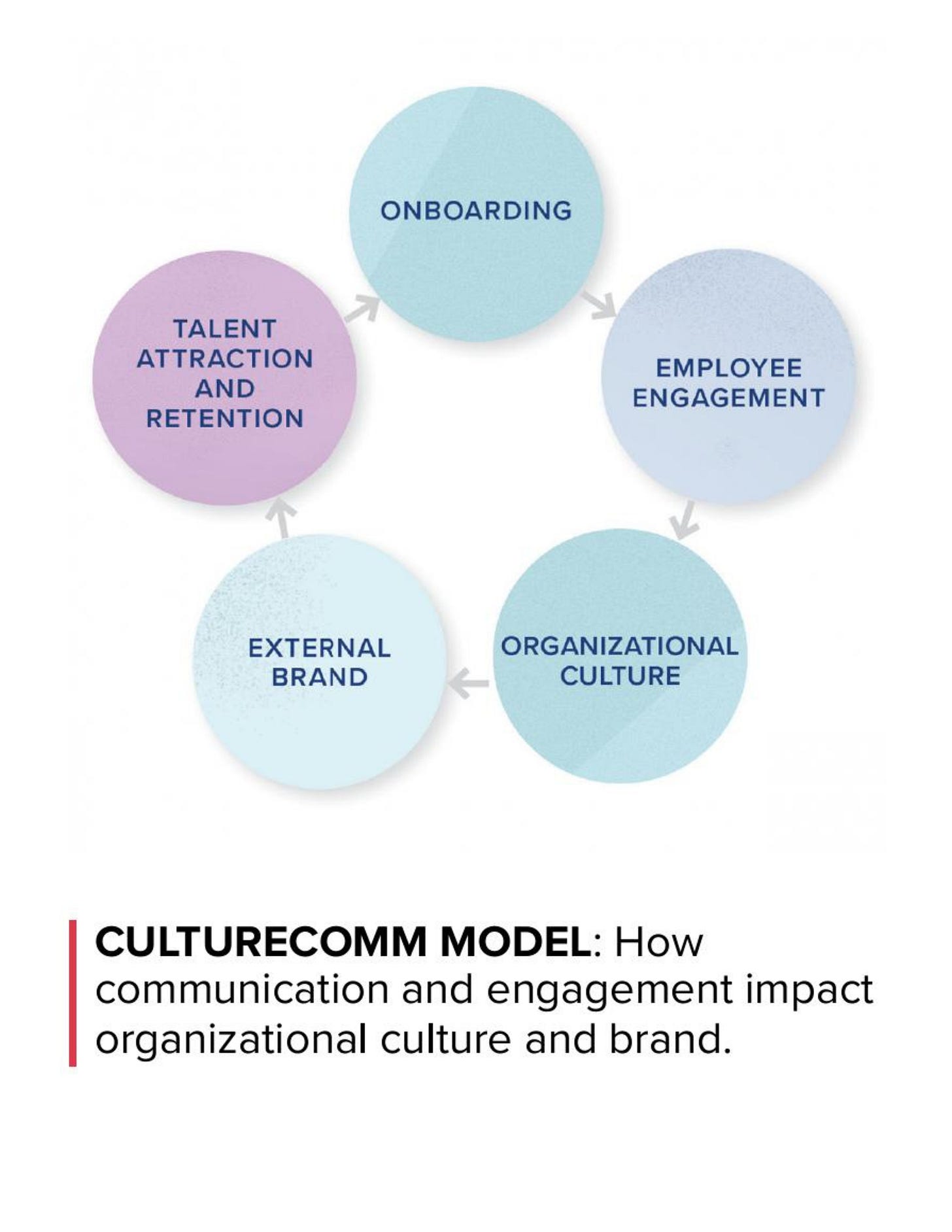
Through my doctoral and postdoctoral research, I developed the CultureComm Model to help organizations understand the impact of communications and culture on their external brand.

I first presented the CultureComm Model to a group of statewide school leaders in March 2018.
In a nutshell, the Model demonstrates how the cycle of properly onboarding and preparing new employees for their roles within your organization can impact their engagement. The level of employees’ engagement affects organizational culture and, eventually, how your brand is perceived by both those inside and outside of your institution. Brand perception can, in turn, affect talent attraction and recruitment.
The CultureComm Pillars
All pillars of the CultureComm Model work together, sometimes in tandem, sometimes overlapping. What’s important to note, however, is that if one of the pillars is off in some way, it can affect the overall cycle.
Onboarding
This is your opportunity to share resources and unwritten rules; introduce your mission, vision, and values; leverage the enthusiasm and energy of new employees, and build brand ambassadors.
Employee Engagement
“Engaged employees are those who work with passion and feel a profound connection to their company. They drive innovation and move the organization forward. They perform better and differentiate you from your competitors.” (Gallup, 2017)
Organizational Culture
Organizational culture is not tangible. It can function as either the social glue binding employees together or the barrier to change within an organization, hindering its ability to move forward.
External Brand
Branding is the ongoing process of establishing a prescribed image or impression in others’ minds of an individual, group, or organization (Ellis, 2009). However, if your internal culture doesn’t align with what you are trying to project externally, your overall brand will inevitably suffer.
Talent Attraction and Retention
It is less expensive and time-consuming to retain employees than to recruit, hire, and train new ones, so all CultureComm components must be working in tandem.
Don’t you want to be an organization where talented employees want to work and grow?
Is Your Culture-Brand Cycle Healthy? A Self-Assessment
Before looking outward at your marketing, look inward at these five areas. If one pillar is out of sync, the entire brand cycle can begin to snowball in the wrong direction.
The Onboarding Audit
- Do you have a written plan? Move beyond verbal instructions to a formal onboarding document that includes goals, key messages, and timelines.
- Are you sharing “informal” knowledge? Ensure new hires know the basics that impact their daily comfort, such as parking, where to store their lunches, and how to order supplies.
- Is the first day meaningful? Avoid leaving new hires alone in a cubicle; ensure they meet their boss and feel welcomed from day one to maintain their initial energy.
Employee Engagement and Training
- Do they know the “Why”? New staff, particularly front-line and front-office employees, must be trained in your mission and vision so they can speak enthusiastically to donors, prospective students/parents, customers, and other key stakeholders.
- Are you utilizing current staff? Involving tenured employees as trainers can increase their own sense of pride and engagement.
Organizational Culture and Perception
- Is the culture visible? Customers will be on the receiving end of the miserable employees’ mood – you cannot hide a poor internal culture from the audience you serve.
- Are you cutting through the mystery? Provide “Who to Contact for What” cheat sheets to reduce the frustration of navigating a new institutional structure.
External Brand Alignment
- Do your recruitment materials match your brand? Analyze your HR website and job descriptions to see if they truly reflect your institution’s philosophy and guiding values.
- Are employees acting as ambassadors? Engaged employees should feel like official representatives who personally recommend your organization, company, or school to their own networks.
Continuous Evaluation
- Are you seeking feedback? Use surveys at the one-, three-, and six-month marks to identify gaps in your onboarding and support systems.
- Do you measure against goals? Constantly compare employee feedback against your stated organizational objectives to tweak the program as necessary.
Next Steps
- Read the full article: For more in-depth strategies, you can find my original piece in CASE Currents here.
- Join the conversation: Which of these areas do you feel is the strongest at your organization right now? Which needs the most work?
- Stay informed: Subscribe to the Field & Fika email list to get the latest research on building a culture-first brand.

I help organizations build better workplaces through story-driven internal communication that drives employee engagement and cultural alignment. As the creator of the Culture Comm Model, I translate values into behaviors, strategy into clarity, and vision into everyday experience.


