I’ve spent the last half of my career examining the gap between the culture organizations say they have and the culture people actually experience inside them. I’ve studied it, written about it, and built a framework around it. I’ve walked into boardrooms, faculty senates, and C-suites and asked the same fundamental question: Is what you communicate actually what people live?
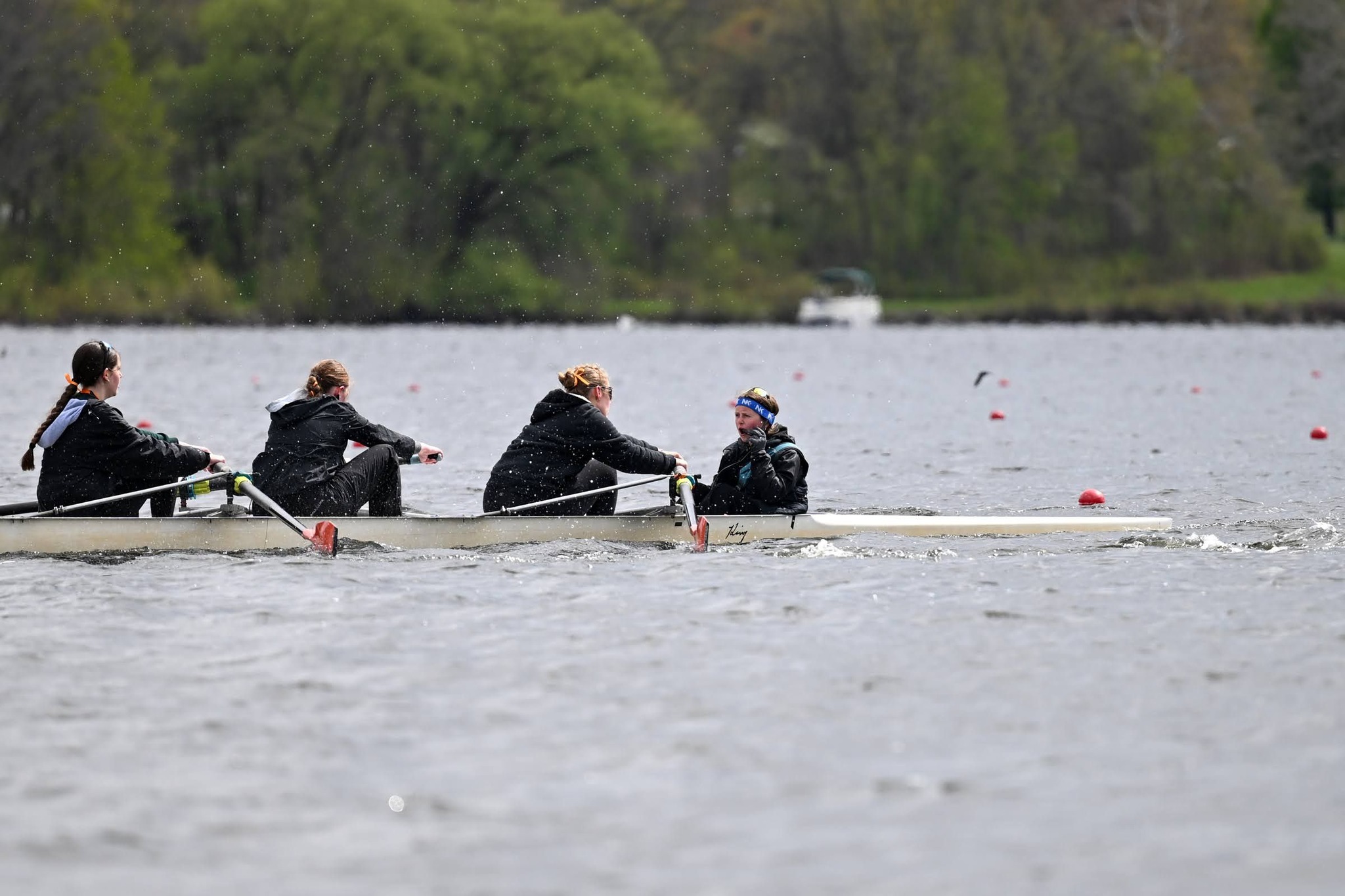
This spring, I watched the answer to that question — not in a boardroom, but from the banks of a regatta course, cheering for my 14-year-old daughter.
What the Northville High School Rowing program has built is one of the most quietly extraordinary examples of organizational culture alignment I’ve ever encountered. And I’ve been taking notes.
The Long Way to the Cox Seat
Avery has wanted to be a coxswain since she was 10 years old. What followed was two and a half years as a rower in middle school before she was even considered for the cox seat. The philosophy is that you have to understand how each seat and role functions before you are “qualified” to coach on the water (and navigate a very expensive boat full of other teenagers).
You see, a coxswain not only steers the boat but is solely responsible for coaching the team throughout a race. They develop and communicate their race plan to their teammates in advance and must execute it as close to perfection as possible. This is not only for competitive reasons; it is also for safety. They are, in fact, young athletes on the water without life jackets.
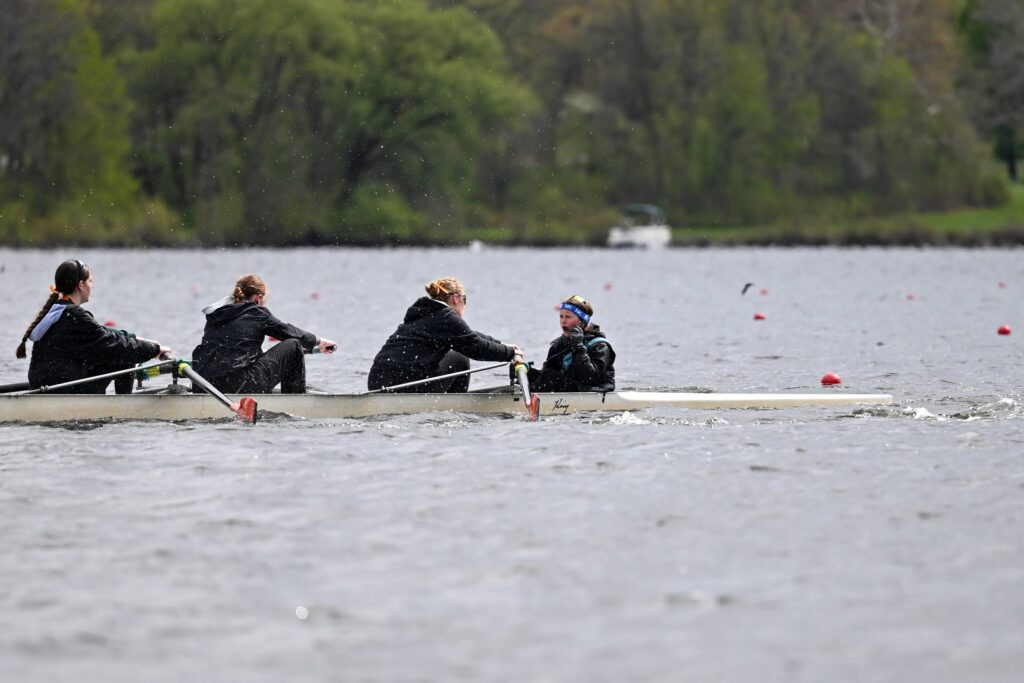
When Avery finally reached high school, it took nine months of advocacy to get the administration to allow her to compete under the school’s name as an out-of-district athlete. She wanted to compete for her hometown school like her friends in other sports did, but wasn’t sure if it could even happen.
She trained six days a week, knowing she might never get to race. She showed up at 6am on Saturdays to support her teammates at regattas she wasn’t allowed to enter. She cheered from the dock.
This year, that same kid walked away with seven medals — including three gold — and became the coxswain of the first undefeated 8 boat in the school’s history. Her coach petitioned U.S. Rowing to let her cox her boat at Junior Nationals (which they qualified for). When the petition was denied on out-of-district grounds, he surprised her with the program’s first-ever varsity letter awarded to an out-of-district athlete.
She held her head high throughout all of the ups and downs.
She’s 14.
I honestly don’t know if I would have kept showing up the way she did. But here’s what I keep coming back to: she didn’t do this alone. She was placed inside an organization that made showing up feel worth it — every single day.
Culture isn’t a value on a wall. It’s a 6am Saturday, in the rain, when you didn’t have to come.
1. The Leader Models the Standard
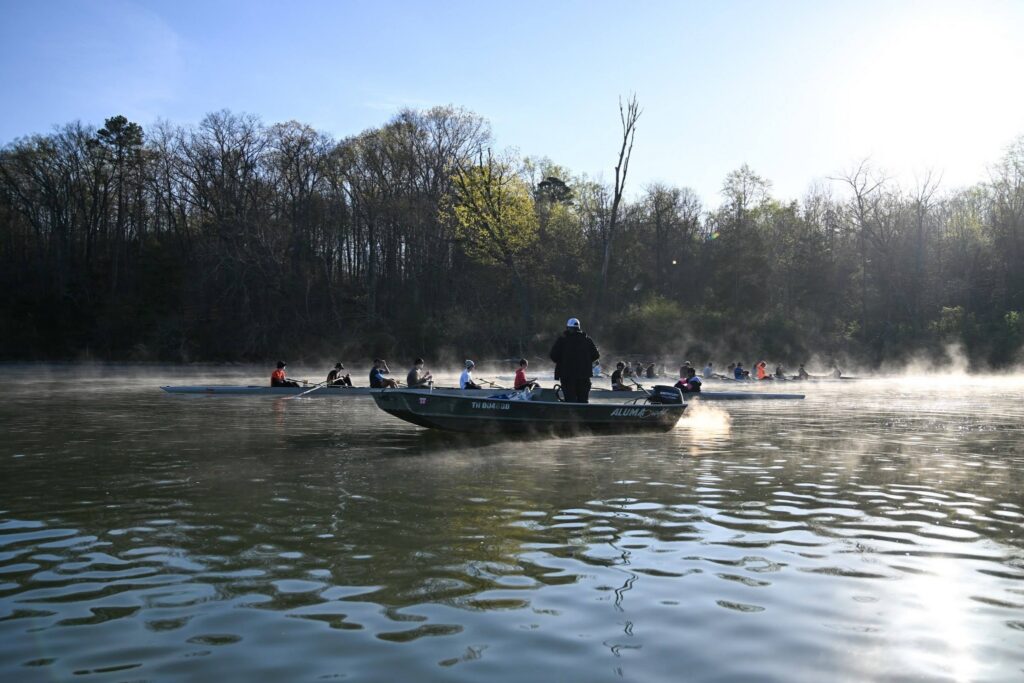
On cold, rainy, miserable mornings and afternoons — the kind where canceling practice would be entirely justifiable — the head coach has them train, as long as the winds aren’t too strong and there is no lightning or thunder. Not as a punishment or a flex of authority, but because he understands something most leaders forget: conditions will not always be perfect, and your people need to know how to show up anyway.
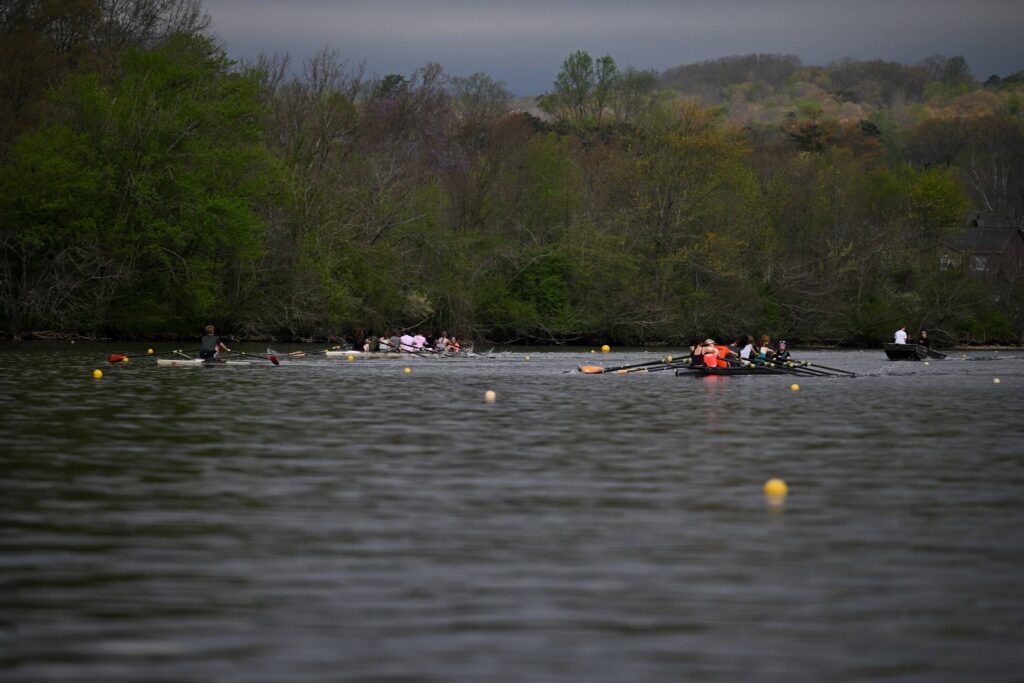
This is leadership by demonstration, not declaration. He doesn’t ask his athletes to do anything he isn’t willing to do himself. He is at practice before they get there and is the last to leave. That posture, repeated day after day across an entire season, becomes the culture. Not a slogan. Not a slide in an all-hands meeting. A lived expectation, modeled from the top.
There’s a practical dimension to this too. Michigan rowing families know to keep a full weather kit in the car at all times — changes of clothes, blankets, sunscreen, towels, extra food — because during regatta season, you can experience all four seasons in a single day. That’s not an inconvenience. It’s the lesson. Conditions are rarely ideal. Preparation and adaptability aren’t optional. The coach isn’t just training athletes to row; he’s training them for life.
Much of the work I do with organizations starts here, with the gaps between what leaders say and what leaders do. When those two things are aligned, trust follows. And trust, it turns out, is what makes a boat move.
2. Accountability is Structural, Not Aspirational
In rowing, accountability isn’t a values statement; it’s physics. If someone doesn’t show up, the boat doesn’t launch. Every single person matters, every single day. That’s not a metaphor. It’s the operating reality.
Ninety-four (94!) student-athletes, from diverse backgrounds and life experiences, have internalized something that most adults in most organizations struggle to genuinely feel: my presence matters. My absence has consequences. The team needs me.
One senior demonstrated this more powerfully than any workshop or training module could. Injured the day before States, he technically could have raced. He chose not to because he didn’t want to risk his teammates’ chance at winning. They medaled without him, and he stood on the banks of the river, supporting them.
What other sport, at scale, produces that kind of voluntary sacrifice in a 17-year-old? The answer is: it doesn’t happen by accident. It happens when the culture has been built carefully enough that athletes feel the weight of belonging and act accordingly.
3. Belonging is Built Into the Design
One of the reasons I fell in love with rowing long before Avery picked up an oar is that it is one of the few sports where all body types are genuinely celebrated. As a former collegiate athlete and junior tennis player, a mom of girls, and someone who has conducted research into student mental health and well-being, I know the slippery slope that can come with sports and body image.
There is no perfect “rower body.” There is only the right fit for the right seat.
Avery, who has topped out at 4’11”, was born to cox. It aligns with both her size and her personality (a drummer for six years, she is very used to keeping time for a group). Her senior mentor, who guided her through the summer and fall, stands at 5’10” and is headed off to a top university rowing program next year. She is outgoing and made sure Avery was introduced to the varsity women before school even started in the fall — a true leader. They’ve trained alongside each other for almost a year. That’s not a diversity initiative. That’s structural inclusion: belonging baked into the sport’s architecture.
The coach takes this further in practice. He’ll deliberately mix boats — boys and girls together, novice rowers alongside scholarship-bound varsity athletes — even as far away as Tennessee on the spring break training trip. For Avery, this means constantly recalibrating her leadership in real time. What motivates one rower doesn’t translate to the next. What worked in one boat configuration won’t automatically work in another. She has to listen, read the room (or, in this case, the boat), and adapt — skills that don’t show up on a medal count but matter enormously.
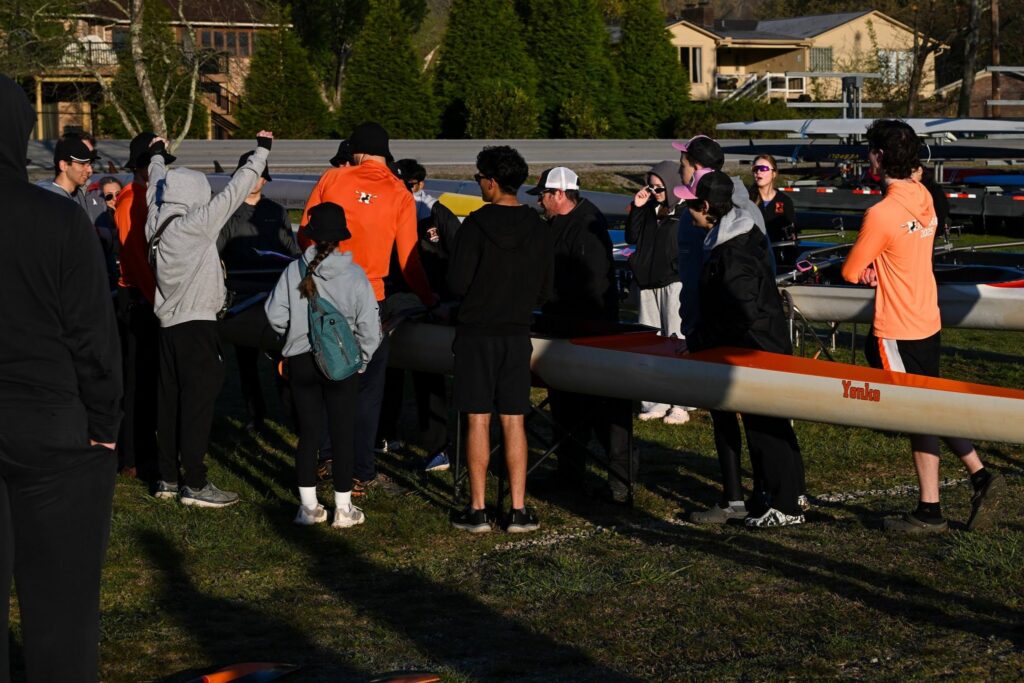
In organizations, we often treat belonging as a program to be implemented. Rowing treats it as a prerequisite. Everyone has a seat. Everyone’s contribution is specific and necessary. Difference is an asset, not an afterthought.
4. The Coaching Staff is a Living Case Study
Former University of Michigan and Penn rowers. National team members. These athletes don’t just hear about excellence; they stand next to it (and often race against it) every day at practice. They watch coaches who have won, lost, and navigated the full arc of athletic and personal struggle model what perseverance actually looks like in practice.
There’s also something important about how the coaches hold the emotional weight of the sport. They understand the physical and mental demands in a way that parents — as invested as we are — simply cannot. They can reach athletes in those moments of doubt or exhaustion in ways we can’t. That’s not a slight against parents. It’s an acknowledgment that great coaches are a specific and irreplaceable kind of leader.
Access to that level of mentorship, at the high school level, is rare. And it shows in the athletes it produces. The coaches model what hard work and focus can achieve, giving the teens something to strive for if they want it.
5. The Parent Community Runs Like a Well-Documented Organization
Northville co-hosts six or seven regattas annually, with each one drawing thousands of athletes, coaches, and families from multiple states. Running an operation of that scale, repeatedly and reliably, requires something most volunteer organizations never manage to build: institutional knowledge that doesn’t walk out the door when a family ages out.
Northville has built it. Every volunteer task is documented in detail. Primary and backup contacts are assigned. Before the season begins, each family is given a point allocation (“dibs”) and a gamified registration system opens on a set Sunday night, weeks before the first regatta. Families race to claim their slots. Descriptions of each task are included so no one goes in blind. The system is so well-documented that stepping into a new volunteer role requires almost no ramp-up time.
Charged with setting up the food tent in the dark at 4am? There is always an experienced volunteer leading the group, with documentation so detailed that you know how many inches from the edge of the table the griddle goes. Signed up to install the docks? Years ago, a parent numbered the pieces at each end, so all volunteers have to do is match up the numbers.
If students have to function as a team, the thinking goes, why wouldn’t parents? The lanyards bearing each athlete’s photo, name, and graduation year are a small but clever detail — instant context, easy connection, organic community. And although many parents are bigwigs at their jobs, everyone is on the same level when it comes to supporting the team. There are no egos. Just a group of people focused on executing the same mission.
A Fortune 100 operations team would recognize this. Most nonprofits and educational programs would envy it.
What This Has to Do With the Rest of My Work
I’ve written elsewhere about the gap between communicated and experienced culture: the disconnect that erodes trust, disengages employees, and quietly undermines even well-resourced organizations. The antidote, in my experience, is exactly what I witnessed this spring: culture that is practiced, not just proclaimed. Leadership that models. Structures that make accountability real. Belonging that is built in, not bolted on.
Avery’s season was exceptional. But the conditions that made it possible — that made her want to keep showing up even when the rules weren’t built for her — weren’t accidental. They were built.
She’s been taking notes. So have I.

Dr. Amanda Holdsworth, Ed.D., APR is a fractional CCO, CXO, and organizational culture strategist. She works with a select number of education, nonprofit, and corporate clients each year.


